Jaap Goudsmit: From rabies to COVID: Antibody discovery in the age of AI
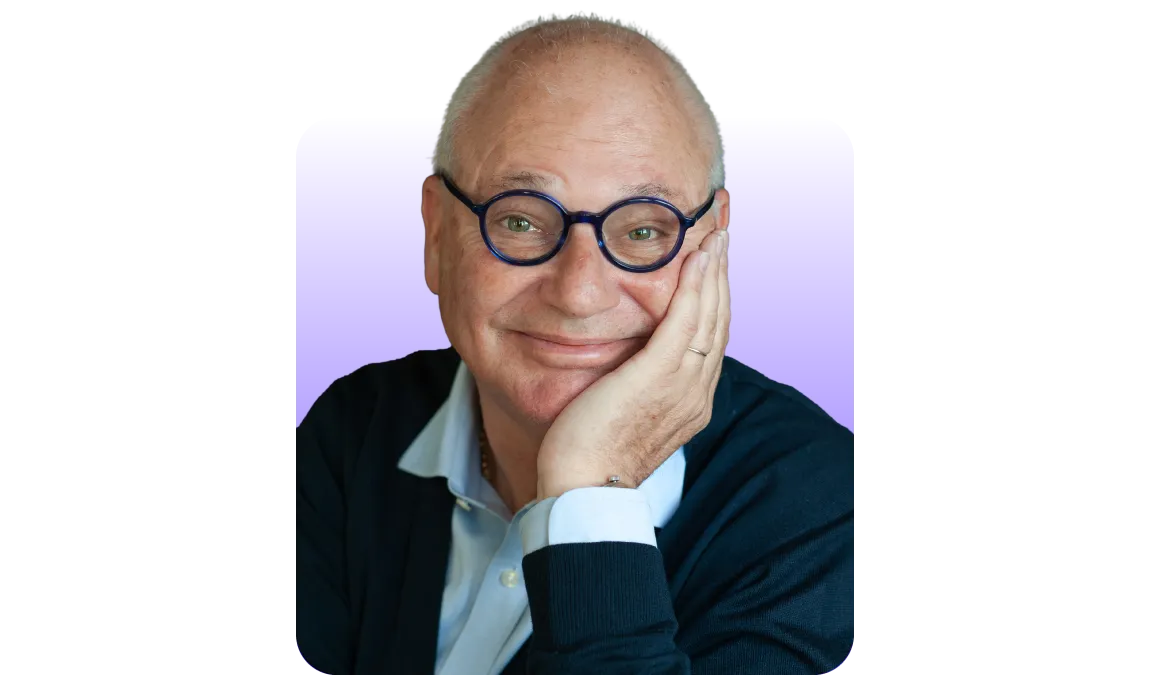



Photographer: Julie Blik
In this episode
Jaap Goudsmit, MD, PhD, is an immunologist, epidemiologist, and one of the scientific forces behind Crucell, the Dutch biotech acquired by Johnson & Johnson in a landmark $2.4-billion deal. His career spans Harvard, Janssen, and many other biotechs.
In this episode of Models & Molecules, Jaap discusses the evolution of antibody research, the impact of AI on drug development, and the importance of collaboration between different fields. He reflects on his career journey from medicine to the biotech industry, emphasizing the challenges faced in antibody discovery and the complexities of ensuring safety in drug development. The conversation dives into the transformative role of AI, emphasizing why high-quality training data is essential for the next generation of therapeutics.
Key takeaways
- Data quality determines AI success. Improving AI models in drug discovery isn't just about the algorithm; "sorting out the noise" in training data is a key element to achieving better results.
- Beyond simple affinity. The new frontier and the primary cause of failure is predicting safety and stability.
- Effective discovery requires an "MD perspective" that considers the final application immediately. These constraints like formulation, device, scalability are often irrelevant to tech algorithms but are critical for commercial success.
- To make predictive AI work for safety, the industry needs "huge databases on failures". Currently, we only tell the "positive story", which leaves AI blind to the vast majority of biological reality.
- Effective collaboration requires bridging the gap between tech's "front to back" capabilities and the wet lab's "back to front" clinical reality. Success depends on the community developing a wider understanding of the specific biological purpose to ground technical optimism in practical application.
- Truth is intuition confirmed by consensus. Scientific truth isn't always a logical process; it often starts as an intuition where a researcher "feels the truth" before the data fully supports it.
Transcript
NicolaJaap, it’s great to have you here today at the show. And you have, I think, a really great career that spans all kinds of, from science to industry to startups. Is there for you a common thread that touches upon all the different experiences that you had so far?
Jaap GoudsmitYeah, at a certain point, if you look at how at least my career went forward, I’m of course an MD, PhD. So, I first got a glimpse of what human suffering actually looks like and what the need is for interventions, being it antibodies or any large molecules or small molecules that actually could help us to treat whatever disease there is. I was, of course, specialized in medical microbiology. So, my field of purpose or what do you call it, a field of activity was always in infectious diseases, particularly in virology. That means that I think the first antibodies that I actually encountered were polyclonal responses to vaccines or polyclonal responses to infection.
Jaap GoudsmitAnd from there on, I moved into the industry in around 2000 to become the Chief Scientific Officer of Crucell. And we had a large department of antibody discovery. And the first experience I had there, if you look at everything I did, was to understand what a functional antibody actually is and what it could do.
Jaap GoudsmitAnd I think I spent from the end of the eighties to now, particularly in finding new roads of activity, in other words, to make drugs or antibodies into drugs. I moved into monoclonal discovery, which has essentially started out with B-cell transformation attempts, and subsequently going from there to phage display. And over the years, I started to go from antibodies as a drug substance to drug products, to actually how to formulate them, make them stable, grow them up, et cetera. But always started with target engagement.
Jaap GoudsmitSo, for me, the first big experience that comes to mind is finding a replacement for the treatment of a rabies infection, being it through a bat bite or a bite of a wolf or anything of that kind, or a dog, a rabid dog. And originally, there was a polyclonal response. It was a treatment in, for instance, if you were bitten in your face or hand, the first thing that happened is you had to disinfect the local region. So, you injected polyclonal antibodies derived from mostly horses originally, later from vaccinated individuals or infected individuals, purified immunoglobulins essentially, shoot half of the vial into the localized bite site and the rest you put in the arm.
Jaap GoudsmitI first discovered rabies monoclonals and actually that actually had to replace those polyclonal, always somewhat dirty, drug substances or drug product. I worked together with Sanofi at the time, who actually were one of the biggest producers of polyclonal antibody products. And we decided that we try to discover two complementary antibodies. So, I started to learn about mixes and mix those antibodies and then increase the potency compared to a polyclonal response, which was easily done.
NicolaYou started working on that quite some time ago and I just wonder, would it be the case that if you had back then technologies that are available now, that work would have been, I don’t know, faster or simplified? Do you maybe, also specifically thinking about AI, do you think it would have been a concrete help for that type of studies that you conducted back then?
Jaap GoudsmitI think so, I think so. Don’t forget what we had to do is going through first finding antibodies that at least bound, and then, I can tell you a lot of stories of that, the target. Now, how to find that out? You have to produce one way or the other, but generally in eukaryotic cells, the antigen to engage to, which was, for instance, in rabies, the outside envelope or the outside of a particular virus. Now, originally, we even did that with irradiated or inactivated viruses, this kind of thing. You didn’t even have a sequence to work from. You have to imagine how crazy it was. Essentially, I used my old technology to grow in a cell line the particular pathogen in this kind of rabies virus, which was easy to do. And subsequently, you need a safety lab. You need it because it was very dangerous that you are not infecting yourself. So then you grow it up. Then you have to inactivate the antigen. And then you started to actually use it as a selection criterion. You cannot even imagine those early days. I think if we had the easiness of sequencing as is nowadays. And also, then you had to characterize if it actually was protective at all. So you went through in vitro correlates of protection, which essentially is things like virus neutralization, affinity of binding. And then I was not even industrially that apt. I didn’t know much about the industry.
Jaap GoudsmitI remember I at a certain point made some antibodies myself, then some competition from another university, I remember the University of Pittsburgh. They claimed they had some complementary antibodies found, so you had to test out if they were complementary, that there was synergy between these antibodies of antagonism. Now you went through years of discovery work, which nowadays, you can directly sequence antibodies from a Beacon machine or something like that. And if you had finally a sequence, you could now derive and that would increase enormously, almost predict relatively well where it bound and if you could predict that it actually would protect.
Jaap GoudsmitSo I think with modern technology, particularly after the AI predictive ability, you could for sure improve the speed at which you actually… and then we come maybe at other aspects, you could see where it actually bound and you could predict where it would bind if you would know what kind of, particularly if you compare it to what AlphaFold 2 and AlphaFold 3 could do, then you would say, okay, if we ever reach a point that I had a sequence, then it would be amazingly much faster than we originally did.
Jaap GoudsmitNow, when we had sequences, we got, of course, in other kinds of problems. We had to go from co-crystallization. Of course, you had a very high failure rate with making co-crystals from a protein with an antibody. Then, of course, Cryo-EM came around, which was 10 years later or something. So you didn’t need that purification or crystallization. So we went through all of these phases that most students of mine don’t even know that those technologies existed.
NicolaWhat time are we talking now about?
Jaap GoudsmitI would say mid-80s, 90s. So it went faster and faster to go from knowing a target to actually, and now even today, I mean, you can almost de novo design antibodies that actually bind to it, which I think is another important point is we first had the problem of finding needles in a haystack. That was the first problem. But the haystacks were relatively small. And we had almost no noise because the only thing you throw out 90 % of things that actually might have done something. Later on, when the haystack got bigger, the problem became noise, because you didn’t know what noise you actually create at the same time.
Jaap GoudsmitAnd I’m not even talking about predicting things like scalability, what glycosylation does and tertiary structure. All of these things were, we couldn’t even imagine how an antibody looks like. You have to understand how little we know originally.
Jaap GoudsmitSo I went from rabies to, and I think that I made antibodies to a lot of viruses. I collaborated with the whole world on those, got more and more specialized. I would say I’m a kind of scientist who made reagents essentially. The main goal I had in my whole career was make the best binding antibodies that you could find and particularly which then had functionality in vitro and protected in a kind of animal models going up to monkeys and man, even to challenge studies in humans. And you had to go through all these to actually get it a better antibody or the best antibody or a complementary antibody. So the road was five years minimally. And you had to be very lucky to find the right ones.
NicolaAnd now I think the framework is changing a bit because indeed, as you are mentioning, we are shifting a bit away from finding perhaps the needle in the haystack and more towards, you know, maybe conjuring the needle out of thin air. But one thing that you said struck me because you said at the beginning, you know, you being an MD first and maybe foremost, I don’t know, that also showed you and you have seen the pain from the patient side and that strongly motivated you. So in a way you have been deeply embedded in this type of industry. Now the pharma industry helping patients since the very beginning.
NicolaBut I think recently we have seen other people maybe coming from a very different angle from tech or from places like that, making also sometimes very big claims saying, you know, through AI we will be able to cure all kinds of incurable diseases. Sometimes, some people say even we will be able to cure all diseases. So very bold claims. And I think that those bold claims are often met by people in this field a bit with rolling eyes, thinking, oh you guys don’t know how complex biology is.
Jaap GoudsmitNow, I think you hit a very good point. I’ll give you an example of how crazy it can go. When the SARS epidemic was around, this was in 2003, which started in Hong Kong. I just came back from Singapore to work with friends, which are all now retired except me. Most have one year to go in this kind of situations. And we discovered first, one antibody which actually neutralized in an animal model at the time we used rhesus macaques as well as human- as well as mice. And mice, as you know, that’s another problem. To predict protection in humans, you actually need minimally a non-human primate. Mice generally give you misleading, too broad claims. Now, if that gives you already too broad claims, you have a lot of steps to go through to get at the functional drug product, either by whatever means you actually apply that.
Jaap GoudsmitAnd that is interesting because I think we can learn a lot from each other. In other words, I come from the wet side. And to answer your question accurately, the more you collaborate between the need of something and also with industrial experience, you have to understand that how does actually an antibody product look like? It looks like the original discovery of an antibody, I can talk a lot about that. Then that antibody has needs first of all, to be able to scale to the level of what market you have. So what we also understand is you have to always ask from a medical point of view, is this a preventive drug? Would you want to prevent the disease to occur? In other words, a mass product, then the application should be cheap, and the application should be relatively easy to take, like by intranasal application or administration, or an injectable, which is actually easy to do, not in too big of a volume, but you should at least make enough antibody to surface that.
Jaap GoudsmitThen the other problem always, which people underestimate, is then you have to make the drug product out of it, which is essentially a combination of a device to administer, which can be a syringe, but it can be also a spray, or it can be inhalation, combined with a formulation, you put that particular product in. That is already complex.
Jaap GoudsmitThe question is, are we already able to predict a drug product from, say, the sequence? I think you cannot at this point, but there will be a moment that you know a file. So I think it comes from this.
Jaap GoudsmitSay, you can identify libraries of antibodies, of course, huge libraries, and you can select out of these libraries relatively easily the highest affinity antibody that you can find. But then, the world only starts from there, because essentially that means that you have to prove that that drug, that potential drug substance is able to actually bind with high enough affinity that it actually has a function. That function is sometimes related, sometimes not to the way you administer it. In other words, if you take a virus that infects you in the nose, like SARS or SARS-CoV-2, which is the cause of COVID, then you have to say, okay, it enters the nose and it infects first the nose. So, how does it work in that setting compared to where you put the antibody? If you put the antibody directly close to the antigen, then you can make a complex relatively fast and then it neutralizes relatively fast in vivo. However, if you inject it in the arm, it has to actually go through a lot of reductions in amount that you might have a non-effective antibody in the local port of entry for that particular pathogen compared to actually putting it in the arm where it has to go through all the serum degradation and go all the way to the nose and nothing is left. We had that concrete experience.
Jaap GoudsmitBut also, for instance, it was very interesting that these viruses might mutate. So you need the kind of combination of an affinity to a variation of that particular family of viruses. That was in SARS not a problem because it was the same for every virus originally in 2003 that infected individuals, which was a contact infection, but the virus itself was not very mutable. In other words, it was very constant.
Jaap GoudsmitBut then we saw that in the animal that infects people, which in this case was a civet cat, which people ate, and that is where medicine comes in, is where comes the, what is exactly the origin of such a thing? We couldn’t neutralize or protect against new viruses that come out of the zoonotic environments, which was quite… So we had to find the second antibody. So we found the second antibody.
Jaap GoudsmitSo the first SARS antibody happened this way. There was an individual who flew from Singapore to New York, got in New York in an airplane back home and got a high fever and coughing like an idiot with SARS, then was almost dead in Frankfurt, was brought to an infectious unit which was able to actually handle this kind of very, very infectious agents. There we actually got the virus from because it was isolated by a German. And then we drove there, there was no sequence known. So we drove to Frankfurt. One of my colleagues, Jan ter Meulen, was in the laboratory. I worked at Crucell already as Scientific Director. So he drove in his car, inactivated the virus itself, like I told you before, also for rabies, it was the original route. Because we had no sequence, then subsequently, we drove back and we isolated one antibody, a very famous antibody, CR3022. Now, that turned out to neutralize and protect in all kinds of animal models. And it took about a year to figure out, the first year of discovery in 2003-2004. But then it turned out that that civet cat viruses were not neutralized or protected against. So we had to find the second antibody. So I had to learn where to isolate it from. And that was interesting. We isolated it from the Singaporeese individual, that actually originally we had taken the virus from in Frankfurt.
NicolaHe was the original one in Frankfurt.
Jaap GoudsmitYeah, the original virus from him was isolated. He flew back to Singapore. And that’s how I know my friends in Singapore, because they took blood of that person, the same person. So we isolated the second one, which had to be complementary and not antagonistic to the first one to cover both. So you see here a complexity. Nowadays, you would make bispecifics or even more complex structures. And we just had to find and then mix the two of them.
NicolaDifferent groups around the world have to basically come together to approach this, which coming back to what we were saying on the fact that there are people in tech that have this bold claim. Maybe they need to do that in collaboration and we need to think that there has to be a collaborative environment to make that happen.
Jaap GoudsmitTwo, three, or four collaborations you need. You need a collaboration in a way of the people who actually see these patients where you want the… which have the infection… you know, a new virus coming up like COVID. Then you have to get to know the sequence to make a protein of, for instance, to actually select antibodies.
Jaap GoudsmitBut if we go back to the SARS story, now we had two antibodies, one was CR3O22. And what was amazing, already completely new kind of thinking, when on something like the 21st of January 2020, we knew that in China was this new virus that caused COVID. And the Chinese actually published that in the first paper. We could use the sequence and look at… but we had already published the first one, the 3022 antibody. And it turned out that the scientist who discovered it, which was at Scripps, and then you see how many collaborations you need. He called me up and he said, I think this antibody can actually bind to the Wuhan original strain, it was the only one around in the first quarter. And that antibody then could be used – because it was cross reactive with not only SARS, but also SARS-CoV-2, which was the cause of COVID. Now then you see how important collaborations are because then we knew it, we could send that antibody out. So you had to realize that we already had a huge connection, a huge amount of that antibody. We could send it around and it was used in diagnostics. So you could identify the causative agent.
Jaap GoudsmitSo that was where it started. It was not even therapeutic. This antibody then, we looked if it was only therapeutic, which it was not. But others then in Australia and other places made this antibody actually into… and that was already starting in the early computer days because this was 2020, but people were already having a lot of technology available that they could almost predict by docking experiments and those from co-crystals how this antibody actually bound. And they could actually see that the chance that it was functional was small. So they could improve the binding affinity as well as the direction it was binding in if we go into details, and could actually predict already that it might yes or no actually has a function in protecting against it, which it did not do. That came much later.
Jaap GoudsmitSo I would say you need so many collaborations worldwide to get that going. But you need particularly the group of discoverers either at university or small biotech. You need the collaboration with the people who actually can analyze sequences, translate them into protein sequences, then understand a little bit on docking or how this docking works based on co-crystallization. All cost a huge amount of time. And then you had only the drug substance in hand. This was not even a formulation, not the scale, not the safety prediction, not a stability prediction of that particular antibody, the productivity in the cell line that actually gives you enough antibody to treat people.
Jaap GoudsmitSo, I think what you understand with an MD degree is it’s not so simple. I mean, it’s not so simple to make something which is efficacious as well as safe. And to predict that from a sequence, I think we need even huger databases. The current databases we have take for instance sequences, you might improve affinity. You might be improving humanization if it is a mice antibody that actually you want to humanize. I think that’s all within reach of the coming, if now, if not very close.
Jaap GoudsmitBut then you get the stability over time of that antibody. Then you get to predict safety issues of that antibody, which is also dependent of external factors, like in what kind of solution or powder you actually put it. And then it has to do with actually, can you predict safety as well, which I think is a big challenge. Now, large molecules is relatively overseeable, because antibodies have a constraint in their biophysical entity. I mean, you know what an IgG1 looks like.
Jaap GoudsmitBut if you talk about small molecules, they have bigger safety problems because you actually don’t know exactly how that will react in the body. We see pretty much nowadays that whatever naked IgG1 you actually put from a lot of DNA experiments, where that was also a new development, you could actually shoot DNA in an arm and get an antibody out of that, that locally can act.
Jaap GoudsmitSo that is already an enormous parallel improvement. But still, you have to be sure that you can actually in the future also predict safety because the majority of antibodies fail there.
NicolaWhat do you think makes it so difficult to predict specifically safety?
Jaap GoudsmitWhat happens is that you have to realize that the majority in my experience of antibodies that failed either in my hands or in others fail on a small event into the safety testing, either in parallel of efficacy testing in Phase III or III or in Phase I, which are extended or bigger at a certain dose. So in other words, you stop a trial or when the monitoring board stops a trial in a regulatory process by the FDA in the United States or the EMA in Europe, it can be a very, a heightening of a liver enzyme, which is indicative of liver toxicity or a CPK, which is for heart disease, a risking measure. Then they stop the trial. And the antibody is pretty much dead because you spent all your money and actually you are in an efficacious trial, which is expanded in size.
Jaap GoudsmitAnd subsequently you have a very small safety signal, which everybody is worried about. And then pretty much you’re out of money. So the problem is it can be a one in 300 nowadays. Now the safety regulatory requirements are heightened. So that essentially means that the very small signal, which occurs in one in the 500,000, which you normally would never see during your regulatory process. So a lot of them then fail immediately when they hit the market. So because you do post-marketing safety testing. Efficacious, I believe you can easily get at, or easily, it’s still a long process.
Jaap GoudsmitSo, if we would predict, and I think we will get there, but I don’t know how much time it takes. The early discovery, I believe you can replace and shorten by two things. One is by actually being able to sort out noise, because the amount of sequences you have to analyze and to predict. So, you need the database of targets, which essentially means how variable are the targets at the site of interaction with an antibody’s active site. I have learned nowadays how important not only affinity is in the direct measurement, but also, for instance, the direction or angle on which an antibody actually attaches that particular site. I’ve seen a lot of interesting effects of that.
NicolaWhen you say sort out the noise, you mean from the, let’s call it the training data, the data from which we are learning or from the actual…
Jaap GoudsmitYes, both steps.
NicolaSo basically, in a way you’re saying getting better data is a key element to improve.
Jaap GoudsmitYes, the data have different levels of quality, not only the super number. And we know that from the selection of a library. If you go from 10 to the tens to in the end 10 antibodies that actually do what you want to do, that’s a long road. I’m not sure that we are not missing a lot of points, which in silico looking at the whole body of information could get you better information. But we often don’t know much about the antibodies which are earlier in the selection process. So, if you start to select on a chromo monomer of a protein, while the virus, for instance, covers its outer envelope with trimers, which are very complicated structures, then you get already in a problem if you either select with one of them.
Jaap GoudsmitWe saw differences in the selection procedure already. If you reselect it with virus, you get better information sometimes than if you with a monomer because monomer binding doesn’t mean trimer binding, it doesn’t mean when it is on a surface actually embedded in something, let alone what happens if it contacts. So, I think if you could select earlier on a multitude of characteristics that you actually know in the training set that you have data on. The training might be more important than people think. And that is where the overshoot by the tech people, I think, if I’m being honest, we in the wet world have seen all the failures. While the tech people, because they love sequences, have seen only successes because it’s only silico.
Jaap GoudsmitAnd so, there is a kind of gray zone where you need collaboration or validation and training sets, which are big enough because you have, of course, the formatting of an antibody plays a role, the back end, the front end. You have so many variables and you want to have variations on one constant. I’ll give you an example, which I like to have. You would like to have FC libraries, which is a very constant region. But then for the different cellular receptors, like the neonatal receptor, FC receptor, or the receptors for IgG1 or IgG2 or IgG3 or IgG4, you want to know how they bind and how well they bind to different receptors, which is relevant to the half-life in the case of RNs.
Jaap GoudsmitOr it is relevant for any functional like antibody dependent cellular cytotoxicity. So, you want to be able to all feed that in. So, after you have the target engagement and affinity of the front end, which is just the FAB2, then you want to know how much the light chain does and how much the heavy chain does. But then on the FC portion, you might actually want to know more if you need the function or do you need the absence of function. Do you need just the weight of the backend? No, you want to add all of that information, what it does in particular cases.
NicolaBut do you think that that data is something that can be, for instance, extracted or generated while running an ongoing campaign or there should be specific effort in trying to generate data of that type?
Jaap GoudsmitI have maybe another opinion than others, but I believe that from a natural experiment, you cannot get it. And I think you need experiments which are focused on each function that you want to address. So if you want stability to address, you want to do an experiment where you have a range of stabilities that you actually can identify depending on what the sequence actually can do.
Jaap GoudsmitSo, I believe that in that collaboration there should be more money, which presumably is only industrially possible, that you have libraries of combinations of characteristics that actually are in a constant environment. Say you have an antibody that binds very well to something, you know that front-end is excellent. I have several of those options in my own field, like antibodies to flu or antibodies to anything else, but then say, okay, now we’re going to vary what the role of valency is and how big that information is or any other drug format. Then you have to ask yourself in any environment, like an acid environment or a very basic environment, how did they behave? Do they behave differently in those environments and what kind of variation do we find there?
Jaap GoudsmitThen you can vary in half-life. I have now a problem, currently while we speak. I’m looking into a problem that if I put something in the nose, the classical mutations that are in the FC-portion of the antibody, which is LS and YTE-like mutations, which prolong the serum half-life, those are not any more relevant if actually you put something in the nose or the throat in an inhaler.
Jaap GoudsmitThat means you are stuck. You need the environment to actually keep the antibody in your nose. You have to understand that, for instance, in your nose, you have a turnover of the all fluids in your nose in seven minutes. So how do you keep an antibody in place?
NicolaAnd that’s, I guess, something that comes truly by understanding not only how a drug is discovered, but also how it’s delivered as well, because the two parts are one and the same. You need to discover a drug, you have your drug product, and you need to eventually deliver it to actual physical patients. And that comes with constraints that eventually also have implication in terms of how formulation and other things like that have been engineered.
Jaap GoudsmitI think that data exists, if you honestly ask me, because there are so many good, in the old center core and all those who worked focused on large molecules, particularly antibodies. I think if there could be a consortium of all the big industries who worked on antibodies, I give that example, and they could put together their experiences in terms of what kind of antibodies they have success with, which way they failed, and in which phase they failed.
Jaap GoudsmitI think failure is the best way to get success in the end. So you need a lot of the information which mostly lacks is the waste you actually have created over time.
NicolaThe negative data.
Jaap GoudsmitThe negative data. What we have is the positive story of that one antibody which finally was made into a product that was very successful. For parallel application, you need huge databases on failures. If you had those, then you might be by definition or by default, you have success. And then you can validate it.
NicolaAnd do you think it’s possible actually to convince to generate those data sets, right? Because for instance, if you look at academia, academia is not, that’s my experience, a place that really rewards failures. You always publish the positive results. It’s basically almost impossible to publish negative results.
NicolaThe industry may be different, but sometimes when we talk with pharma, there is sometimes a struggle when scientists have to generate data for machine learning because they didn’t have an immediate return on the effort that those scientists put into actually generating data that eventually goes somewhere else, in another department and they don’t see the immediate return on that. Do you think it’s possible actually to convince – and at this point I would imagine more industry – to generate these type of data that is necessary as you implied?
Jaap GoudsmitMy experience in collaborating with even big pharma is pretty good. In terms of if you have a common goal and you can find a common ground. I think it is possible. This would need a collaboration between, for instance, in silico companies with big pharma and share the data two ways.
Jaap GoudsmitBut then that needs a special way of working in the bent of brothers or sisters. I’m very used to a very collaborative, complimentary systems of thinking where everybody benefits from. Of course, there are hurdles of that, but I would say if you create a non-competitive space where everybody could actually use that information for particular purposes, that could be possible.
Jaap GoudsmitSo it’s a collaboration with, I would say, presumably academic groups who are very versed in it, small biotechs, as well as big pharma. And I think you could speed up. And the question is, how do you actually incentivize that? Which is a very interesting problem, is how you actually get that very directed sets of information of failure to the benefit of all or the benefit of most.
NicolaI’ve seen several initiatives happening similarly to what you were just mentioning, which different pharma companies, different institutes are realizing that it’s necessary at some point to come down and share some data. Of course, there is a lot of resistance in sharing the actual data itself. So, oftentimes I’ve seen this type of initiative ending up in some form of federated learning, which is basically this type of learning in which each company, each institution shared the data but doesn’t actually share the data per se, the data can be used for training but is actually invisible to the other user. So basically, what is passed around is not the data, it’s let’s say the model that is trained on all these different data sets. But do we believe that without the actual raw access to the data and the ability to understand perhaps biases and other implication of that data itself, do you think this is a viable model?
Jaap GoudsmitI don’t know. Time will learn. It might be still a competitive environment where you actually align certain tech companies or companies that actually do what ENPICOM does, or that they align with certain pharma, which you then might be sharing their data. And if they’re big enough, that might be big enough. But what is often not so much realized is that you need a lot more data on things which particularly in the tech world is considered irrelevant, like the formulation in which the antibody actually works. I’ll give you an example.
Jaap GoudsmitWhat do you want for characteristics of that stability, for instance, or the ASIC environment or the preservative that it doesn’t infect it because it is a multi-dose file where you put it in. Now that kind of information is now very often lacking. So I would say, presumably we still go through another 10 years of having one-to-one, one-to-two kind of collaborations between certain tech companies and certain pharma. And the more you collaborate, the more you learn as long as it is two ways information sharing. I think to get it into, which actually has happened, there was a lot of data sharing. I was part of a lot of consortia as an industry at the time at Crucell. There were governments paying us to actually collaborate with certain companies. So that is an interesting model.
Jaap GoudsmitSo for flu, influenza, I had an NIH grant where I collaborated with two big pharmas and ourselves. These kinds of things then can be organized. If there is an incentive to actually do that, it has happened during COVID on vaccines for sure, it has happened.
Jaap GoudsmitDuring COVID, the mRNA vaccines were actually competing with protein vaccines. Then subsequently the mRNAs were the fastest, but not necessarily inducing the best immunity, which is kind of interesting. And there were a lot of collaborations because the government organized it. So also in HIV drugs, you saw a lot of collaboration between a lot of companies because you needed combination therapy. If you need combination therapy, it was a drug from one company with another company. So there were minimally two big ones involved. I think it depends on where the collaboration is almost inescapable because the societal need is so big. I think we will go to a future where tech will be collaborating a lot with biopharma.
NicolaYeah, and I think I’m seeing that as well from both sides that they’re sort of getting closer to each other very much. And I think before adding towards the end of the episode, I wanted to zoom out a little bit because you are definitely one of the world experts in public health. So I just wonder whether you have a view regarding, for instance, what could be the contribution of AI in preparedness for the next pandemic? Do you think it’s something that could help to be faster, to be more prepared?
Jaap GoudsmitYeah, I think so, but we are not that good in looking back. Now, what I’m saying here, take the COVID pandemic. The COVID pandemic, and this is a very important story to me. In the COVID pandemic people actually made antibodies very early on. The sequence was known, the protein was made. This was the envelope of the virus, there was the target, and there was a receptor binding domain which was the top, but it was very variable. So they made antibodies that actually worked to the first strain and they were very effective. So you had antibodies that were infused. For instance, I’ll give you an example in anti-RBD antibodies into Trump, the president of the United States. And you needed a huge amount because it was applied systematically. You also needed grams of antibody, but that doesn’t matter. But very important was that the virus outran very fast that particular drug. So it was licensed and within six months they were useless because the virus was not anymore binding to the antibody or the antibody to the virus.
Jaap GoudsmitWhat we didn’t look at very carefully is how the balance, for instance, how you actually in a pandemic situation should operate. Because we, I’ll give you an example, we have no idea about the trade-off between the breadth of recognition and the flexibility of an antibody. This is at the very early discovery phase, which is the CDR3 flexibility of what is in the front end. And you don’t have a potency to the individual out selected or out running virus.
Jaap GoudsmitSo, the trade-off between potency and breadth is something we don’t understand enough of, which is an evolution, because it’s in the constraint of our immune system that actually what you discover is also restrained. So I think we haven’t opened yet the unnatural antibodies, for instance, of using unnatural amino acids for making it, or what does that contribute? Totally not synthetic only, but synthetic of antibodies that actually are lookalikes of antibodies, but they’re not really based on natural occurring amino acids. So there are a lot of doors that we have not even employed. But I think that AI, I would say the recent work of Baker on de novo making of antibodies, which can use actually anything that bounds to a certain antigen. So you need libraries of antigens. So take the variation in flu, for instance, or the variation in COVID viruses, so causing viruses. That variation is continuously sequenced. What kind of new variants occur, where they come from, whatever. If you could use only the variation in antigen, then you would say, okay, can I now make a natural thing that actually neutralizes this?
Jaap GoudsmitNow, I think within 10 years, we will be there. And then you speed it up immensely because it’s relevant for universal vaccines as well. Take the COVID vaccine. Whatever infection you had before, the virus outruns you and then the immunity that you can induce has only a stability for that resistance that it creates, it has a stability of half a year to a year. This is nothing. We don’t understand, for instance, why a vaccine against hepatitis B, you are protected after one vaccination for 10 years and hepatitis A even for your whole life. So this means that how the constraints are, if we can break the constraints of a natural antibody and the natural antibody repertoire, then you open an enormous box because then you could say, okay, whatever binds to it, even if it is clay, if you know it’s not recognized, then you can start entering a field of not being immunogenic, for instance. How do you create tolerance?
NicolaAnd what would you think is the most important step to open that box to get into that direction that we still need to take to get there? Do you have an insight on that?
Jaap GoudsmitI think that if the databases are big enough, so I think which is very important if we understand and define better as a community, which can be the whole industrial community that for instance works with large molecules like antibodies, that actually they understand different silos very carefully and what are the deep characteristics of that silo. And therefore, you need a wider understanding of what your purpose is. The tech companies think from front to back. We in the wet field think from back to front. Where is it good for? What do you need to fight? What is the optimal way to fight it? How many antibodies do you actually need? We go from the back. Now, the tech companies all go from the front. So that is why they are over optimistic.
Jaap GoudsmitBut I think if you put the heads together, you will be a lot faster than we currently are. So I think we’ve seen only the beginning of the in silico opportunities. And I saw it in medicine. I was just in Singapore to give you a totally irrelevant maybe example, but it is directly applicable. There you had operation rooms where there were actually no people anymore in. So they were just hanging from the top a set of robotic arms.
Jaap GoudsmitPreviously, we had this strange situation that the surgeon, this was even a few years ago, the surgeon had glasses on and that he could look into what the computer and what the outside operator was actually doing. Now nobody comes anymore in the room. So I think this surgical evidence that you actually can do very complicated heart surgery and with pure robotics and therefore software and therefore they have it done. So if you look at the discovery phase, that’s more complicated than this. But this was in itself and now there are training systems like virtual hospitals, which are totally based on AI or virtual diagnostics.
Jaap GoudsmitNow, take antibody discovery, I think we will get there with AlphaFold as a first one, but we have to identify all the way from how can we actually de-risk. Because it is essentially a process of de-risking. Because their biggest risk is not that the drug failed or that originally, there are so many occasions that I don’t know if a certain antibody after actually had worked if we had done a better job.
Jaap GoudsmitSo you just don’t know if the product failed or you failed as a researcher, as a clinician. So I think the future is there.
NicolaYeah, I think looking back, you know, we started this episode talking about, you know, what we have been doing, what you have been doing in the eighties and the nineties. And now we’re talking about robots hanging in operation rooms. And I think we can conclude that the acceleration of technology is basically exponential if there is enough push to make that progress. I think that’s definitely the case. So I agree with your view regarding the future.
NicolaSo I’d like always to end our episode asking our guests the contrarian question, which is: what is the truth that you believe being actually true in this industry, but very few peers would agree with you on?
Jaap GoudsmitNow, this is an interesting question. I have to tell you a story which maybe doesn’t answer it, but the answer is a little bit. I worked together with about five or six Nobel laureates, collaborated. One was Karplus. So I got a phone call from Karplus, a chemist who got the Nobel Prize at a certain point, he called me up after a paper of mine and he said, “I think I can design a HIV vaccine based on your data”. This was a technique where we took a polyclonal antibody response and actually mapped it with overlapping peptides. So you’ve got the kind of amino acid sequences that actually could form this antigen. And that collaboration ended up in a PNAS paper. It never got to a vaccine, but I started to look at what these very smart people [did] and now we’re going to get the truth.
Jaap GoudsmitTruth is not a logical process, in my opinion. Truth is something that not everybody can find and not because they’re not looking. So I also collaborated with other Nobel Prize laureates and all of them, they feel the truth. It’s not that they are seeking for the truth all the time.
Jaap GoudsmitSo they would say things like, the sweater you have on is actually white, it’s not black. And you would say, and that always happens in the beginning, and I was so lucky to have discovered once or twice something nobody believed. Because in the early discovery phase, the scientific community should doubt everything you’re saying, even if it is in the best journal. So the truth, is a process in which the community of scientists or the community of industries or how do you want to call it, actually come to agreement. But the original truth finder might be people that actually one way or the other have a process in their brains that actually feels the truth. And that brings me back to Demis Hassabis. Demis Hassabis originally in 2008 or 2007 worked in a relatively, I wouldn’t say bad laboratory, a cognitive laboratory in neuroscience, but that laboratory was not very poor, but it had very primitive technology. And he was able as a computer scientist or a logic scientist or a mathematician or how you want to call him, he was able to do brilliant work with very poor technology.
Jaap GoudsmitI started to believe that the people who are the best in our fields, which I don’t say I belong to. But what I’m saying is I can learn from they feel things that are true, so you have to listen to certain people, which you have to identify as your friends that actually tell you the truth. So the truth comes often from outside. The truth, the people who scientifically have the truth. It’s Demis Hassabis is a good example. I mean, he went through AlphaGo and then at a certain point started to look at protein interaction or protein folding or something, because the databases were there.
Jaap GoudsmitI think the truth comes from interaction and not from your brain alone. It comes from mirroring and it comes from listening to the people who apparently have a feeling for the truth.
NicolaSo, I think in conclusion, we can say that you need to have a feeling for the truth, what you’re saying, which I think is very interesting because I also believe it to be true. Sometimes people just feel the intuition. They almost physically feel it and they need to follow it. But then I think the other component of it, which is a bit also what you have been discussing for the past hour is the collaboration. So I think on the one end, feeling the truth and the other end, pursuing collaboration that allows you to find it.
Jaap GoudsmitI did all my work, interestingly enough, with a very limited amount of collaborations. So crystallography with Ian Wilson’s group, but my whole life, I mean, we’re talking about collaborations of 30 years, and I learned very early on from all the time, you have to identify who are the best in a certain complementary field where you know nothing. Those collaborations are based on trust. So I had the whole discussion with Ian Wilson, which is the guy I always work with. And he said, it is so nice that the reagents you deliver actually were the best quality. So you get at a higher priority in the collaboration.
Jaap GoudsmitI think if we strive to be the best of a person in the field that you’re actually working with commitments, that’s the best you can do. But you have to collaborate.
NicolaThank you, Jaap. I think it’s been a very interesting chat. We touched upon all kinds of very interesting scientific and non-topics. So I just want to thank you again for being here today at the show and hopefully see you soon.
Jaap GoudsmitThank you, and I’m looking forward to the next conversations.