Melody Shahsavarian: Agentic AI and the Digital Transformation of Pharma R&D



In this episode
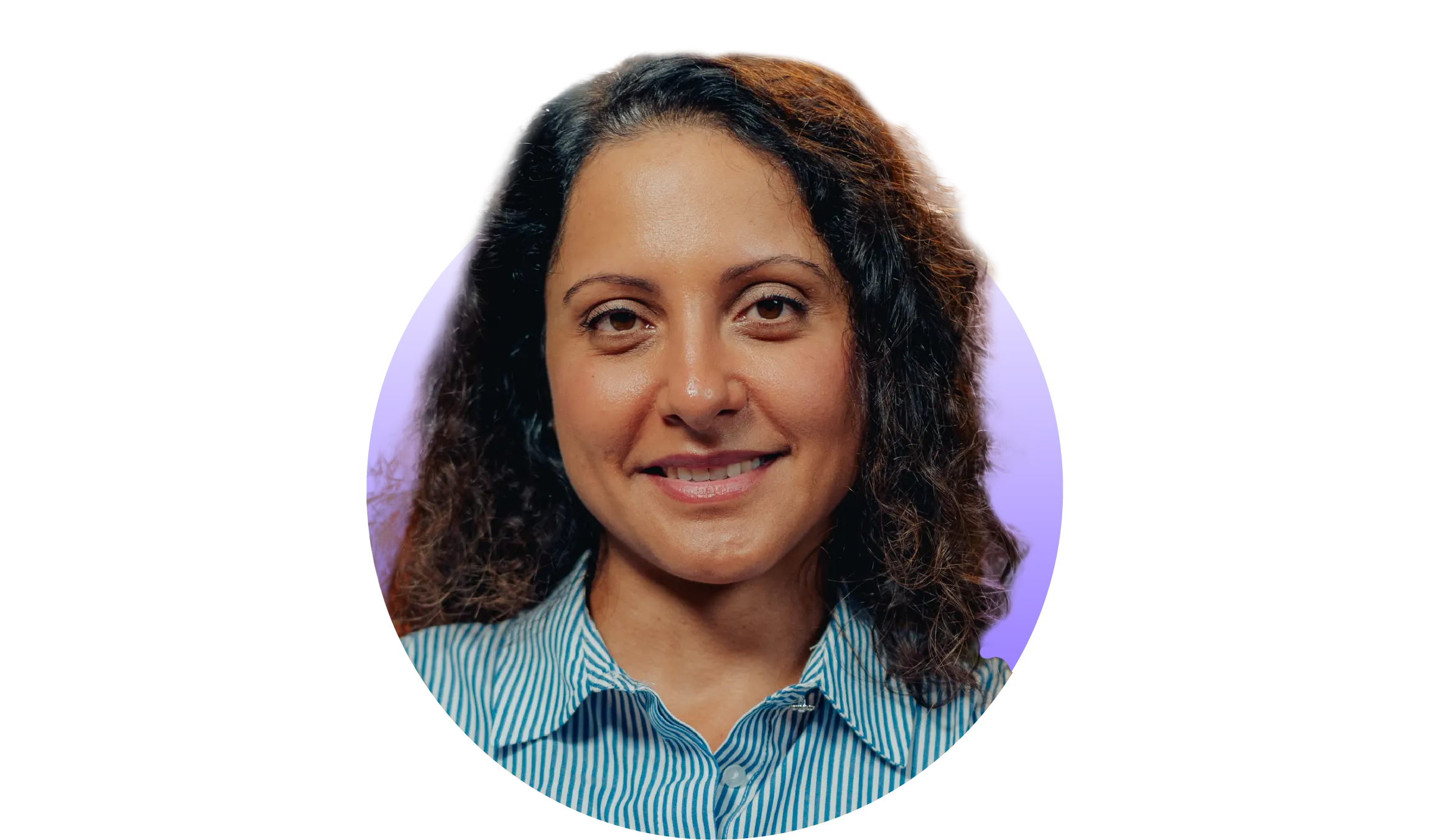
In this special in-person episode, recorded in San Diego, we sit down with Melody Shahsavarian, Senior Director of Data Strategy and Digital Transformation at Eli Lilly. Before Lilly, she led NGS and AI for biologics discovery at Sanofi, where she moved from antibody discovery research into the data and digital side of biologics R&D.
Melody discusses the role of agentic AI in pharma R&D: why scientists have adopted it so readily, where deterministic automation ends and agents begin, and what validation and governance should look like. She makes the case for specialized agents with deep domain context, and closes with her contrarian take: not every problem needs an agent.
Key takeaways
- Leadership can make digital transformation part of everyone's job, but adoption happens when champions inside each function show their colleagues small, concrete examples of how it improves their work.
- Personal LLM use has lowered the barrier to adoption in the workplace. Scientists were already using AI tools in their personal lives, so the usual hurdle of getting them to try a new technology at work was much smaller.
- An AI agent is production grade when it has been validated against different use cases, isn't a black box, is traceable, and its users know exactly where it should and shouldn't be used.
- Specialized agents with deep domain context matter more than faster ones, since the bottleneck is whether an agent knows the workflow, the data model and the analytics behind it.
- Not everything can be solved with agentic AI, for most of those problems the answer is a deterministic automation workflow.
Transcript
NicolaFor this episode, we are in beautiful and sunny San Diego. This is a special in-person episode with a special guest, Melody Shahsavarian. She's Senior Director of Data Strategy and Digital Transformation at Eli Lilly. Before Lilly, she was at Sanofi, leading NGS and AI for Biologic Discovery. Good morning, Melody. It's great to have you here at Models & Molecules.
Melody ShahsavarianGood morning, Nicola. Good to have you here in San Diego too. Good to see you.
NicolaYeah, exactly. It's beautiful here in San Diego, and it's going to be a very interesting conversation today. But before we get to that, I think it would be very interesting to get to know a bit about your experience. You work in digital transformation right now at Eli Lilly, but you have been working in this field for a few years. So, I think it would be interesting to see what your experience has been so far before we jump into the hot topic of today.
Melody ShahsavarianSo yeah, I've been in digital transformation space for going on five years now. I think officially I would say 2021 was probably when I switched over. And I say switched over because of course I started my career in the lab, in the wet lab space. I started in antibody discovery, for eight years or so I was in the wet lab space in large molecule research. And I started with phage display, then moved on to developing certain technologies that enhance, sort of, the antibody discovery process. One with microfluidics technology, I think that's the first one that I started getting into with single cell, you know, getting into analyzing B cells on a single cell level. Based on that, I brought in NGS, so next-generation sequencing to do high throughput, you know, a deep repertoire, both on the bulk level and the single cell level. And that's when — this is probably like six years in, probably just before 2020 — when you deal with high throughput sequencing data, very, very high volumes of data. Inevitably you have to think about how are you going to start storing this data, managing this data, how are you going to analyze this data, right? So, slowly I started working with bioinformaticians to start using analytic tools to make sense of this large volume of data, as well as once the machine learning boost came in just after 2020, and the organization I was in started to bring in machine learning scientists little by little, I started working with them to see how we can leverage this data for machine learning purposes. So, it was kind of like an organic change, both focusing on how we're going to manage this data, store it and enrich it with the right metadata to be able to do the analytics on it, and also how we can start using this data source. It's this large volume of data that can provide a very, very rich data source that we can start using machine learning models to leverage that. So that was the introduction to more of this space. Then in 2021, there was an organizational decision to create a digital biologics research group within the large molecule research organization. The decision was that folks from various groups of the organization will form this new group. And that's when I transitioned fully to digital biologics. From that point on, that was in 2021, [we] started to really more professionally think about how we're going to do data management on an organizational level, how we're going to start developing and implementing these types of technologies on an organizational level.
NicolaRight. And I get it, you're one of the special people that moved, indeed, as you mentioned, from the lab then to a more digital world. And that, I think, is another step that everybody feels like doing. Why was it possible to make that jump? You had something that you felt that you wanted to do it, or the capacity that you wanted to do it, or maybe the organization required you to do it. What do you think was the motivation, the trigger, for really making the jump?
Melody ShahsavarianSo first of all, as I said, just based on my work, organically, I had to get introduced to this. So that's a big part of it, I think. And then just on a personal level, the realization that this is going to be the future. And that interest to be involved in paving the path to this future is part of it. And also, on a leadership strategic level, the realization that if you're going to build this team, instead of bringing outside people, then it will be much more efficient to form the team with people who know the space, right? Like the business that we're in, who have a little bit of knowledge on the other side, on the tech side of things, or like data side of things, that would help bridge the gap.
NicolaAnd that I think is very interesting, right? Because I also work kind of externally in the same field. And I can imagine how difficult it might be to translate these types of needs and requirements. And what basically you're saying are the needs to find somebody internally that understands what needs to be done and actually being able to do it. I think you've been doing that for a while now. What are your lessons learnt there? What is really required to make that digital transformation happen?
Melody ShahsavarianYeah, I think it's key. Without it, I think it won't succeed. I've seen projects where they're mainly driven by the digital organization, so by the IT organization, without much success. And of course, if you work in a shadow IT organization, completely isolated from the IT organization and try to do something in the business, that also is very difficult. There are examples of failure that I've seen in that as well. So where I think, where it has worked well, in my experience, and the cases that I've seen out there is when the business and the IT work hand in hand, but for that to happen, you need that middle layer translation, the types of people who know the business well, who bring that translation to what is needed and work very closely with the digital team, with the IT team to make it happen. So, I think it's key.
NicolaSo, would you see the digital transformation team as something in between, let's say, the more established IT and the business unit? That's how you positioned it, so as a translator in between?
Melody ShahsavarianI think that I would consider it as part of the business unit, but made up of folks who have this ability, you know, like that speak both languages and have the ability to translate what the business needs to the IT partners.
NicolaI think in the past it was also, or maybe still it is, in some labs to have the bioinformaticians embedded to the business unit. Do you see a difference when we call for instance digital transformation to have just a bioinformatician? How would you differentiate, let's say, a bioinformatician that sits in the business unit with a digital transformation team or member that sits in within the same business unit?
Melody ShahsavarianI mean, digital transformation is different than both bioinformatics and data science, because not only are you thinking about developing models, but you're thinking about the infrastructure. I view digital transformation as the team who's responsible for building the infrastructure for bioinformaticians, for data scientists, just as for project scientists. So, the infrastructure component, for that you need the IT team to come in, but you need to understand the business needs both on the data science side and the project science side.
NicolaIt's also the infrastructure and framework level. So it's not just about the specific problem, if I get what you're saying, that maybe it's more the bioinformatician that has a specific goal or deliverable on a specific analysis, a specific project is thinking more broadly at that level that needs to synchronize them necessarily with the IT department to actually be able to deliver across.
Melody ShahsavarianExactly. Yeah. It's the infrastructure and the framework, I think that's a word you use. That also englobes kind of like how does the output of the bioinformaticians work or the output of the data scientists work? How does that connect to what the project scientist needs? This also is part of that.
NicolaWhat would you consider are the deliverables, that digital transformation team, or maybe you have to deliver? What is basically the goal for your team?
Melody ShahsavarianSo, at a high level, I would say the goal is to facilitate the work that both project scientists and data scientists do by facilitating their access to data and facilitating their access to digital tools.
NicolaHow would you measure that in terms of success? When would you say, OK, this goal, that facilitation happened or not?
Melody ShahsavarianWe sort of have defined our KPIs around productivity gain. So, we look at percentage time saving in different business processes. It's not an easy thing, but we have ways of looking at, before delivery of a certain digital solution, what that process looks like, and then once you deliver that, what this future state looks like, and what is the time saving provided to the scientists. So, there are certain metrics that we can infer from the systems, but a lot of it are conversations with the scientists.
NicolaRight, because you can imagine, it's not easy to understand time saving. You're saying that basically, sometimes you have systems in place that allow you to really measure that, but often, other times it's about talking with a scientist and basically asking him, do you find it faster to work this way or that way? So basically, that conversation — which I can imagine also might help you to understand how you can further improve. Because one thing is if the system tells you, OK, you are two days faster. And another one is having the conversation and then from there, it's possible to extract, OK, you are that much faster but you're telling me that if you would be able to do this and this, it could be even faster or something like that. So, do you see that?
Melody ShahsavarianAbsolutely. Part of our job, honestly, and a big component of our job is to have constant conversations with our scientists. That's why it's important for this digital transformation team to be sitting with a business. That's why it's important for us to have representation between each of the different functional groups within our organization to have this constant conversation. Because this isn't a one-job-done. It's a continuous process. And of course, the technology changes. And even on the laboratory side, laboratory processes change. So yeah, it's a constant conversation.
NicolaAnd that I find interesting, because that's basically your goal, or your success also relies on other people making time for you to have that conversation. Because I've been also talking with an organization, which is kind of difficult to achieve because those scientists — it's not in their KPI, in their metric of success to have this conversation, to deliver a certain number of campaigns or things like that. So, I haven't seen not succeeding it. So why do you think that that might succeed in your case?
Melody ShahsavarianYeah, it's a difficult thing, right? Because we are all under so much pressure and we all have these ambitions of we have to go two times faster, five times faster, 10 times faster. So, everybody is under a lot of pressure. That's a given. I think that where it helps is that the leadership considers this as one of the important deliverables. And it's actually communicated top down that this is part of the job of everybody. So that definitely helps. And the other thing that helps, that is a must — because only top down is not going to work so it has to be a balance of both — showing little impacts here and there and getting this concept of champions. We have this concept of having digital transformation champions from different organizations. So, for them to recognize that, okay, this could impact my work, or showing small examples of how it can be impactful, and having one or a group of people championing adoption of digital transformation, that's another strategy.
NicolaThat makes a difference.
Melody ShahsavarianIt's a must.
NicolaI see. Which I think, talking about digital transformation, you mentioned before that part of you moving to digital transformation was, let's say, when AI started impacting R&D and pharma, and perhaps one of the motivations for you to see how much data was needed and how much need there was for digital transformation. I think what we are seeing right now is perhaps, or what we have seen is an acceleration of that. And I think in the early days it was a lot about, and still is, thinking about generative models, generative molecular models to understand how to improve, how to generate new therapeutics. But I think in the last year or so, we have been talking, and we have been hearing more and more also about agentic AI. And this took the stage a bit, I think, together with the other AI initiative, is it something that you have seen as well? And where and when have you seen it first, perhaps, that it was something that was happening in your organization?
Melody ShahsavarianSo, first of all, I think before the Gen AI boost, there was a lot of evidence of predictive AI models, right? That we have seen concrete examples of success of implementing predictive AI, enhancing the discovery process research, because there is more data than the Gen AI, like in the design space when AlphaFold came around and the boost of that. Now in 2026, agentic AI, right? So, with sort of burst of usage of language models, like Claude, like Anthropic, things have changed for sure. And I think that I would say it's really recent that we are seeing a lot of evidence for it, I would say this year. Things have drastically changed.
NicolaAnd for me, it’s a bit surprising in a way. So at least that's my experience. Bringing technologies to the bench has always been not easy, right? Because you need indeed to convince the scientist that that's actually going to make his life easier. But somehow it seems to me that a lot of this agentic AI interacting with LLM, it just was very easy to be adopted, maybe easier than many other technologies that I've seen coming to the bench through time. Why do you think that's the case, if you think that's the case?
Melody ShahsavarianI think that's the case and I see evidence of that too. And I think it's because of the boost of Chat GPT in personal…
NicolaSo, you would say because they are using it in their personal life, then that actually allows them to more easily adopt the tool because they're already doing it in their personal...
Melody ShahsavarianI think so. I think that influenced it because in their personal life, they recognize how transformational it is, where everybody is using that. And I think that it reduced the barrier. That "okay, let me try it".
NicolaThat's so interesting because I personally had a slightly different thesis, but I totally see how that also can be the case. Because what I thought personally was that when you're in the lab and there's people on the bench and they need to get an analysis done, what they do is they look for a bioinformatics colleague and they ask him, can you run this analysis for me? And then their colleague come up with some analysis, he shows it to them, they say, well, actually, can you also do this because I want to know that. And then do a bit more work, then come back, show the analysis. And they thought, with the LLM now, it's basically kind of having their bioinformatics colleague in the same way. So, I thought that was one of the ways, right? In which it's just a way of working that they're used to. It doesn't require learning different tools. They can rely on their virtual colleague, kind of, as they did with their human colleague before. And that incentivizes that use. But I totally see also your point of, if you're doing it already in your personal life, you're already relying on it. Hence, why not do it at work, right?
Melody ShahsavarianI think that for the users to get to the point that they recognize that, okay, oh, actually it can be like a virtual bioinformatics colleague that it can have access to 24/7. But the fact that they started using it to come to that realization was impacted by the fact that they were already exposed to it in their personal life. Because I see that with other technologies or different examples that can be like a parallel to this, even getting them to make that first step to use it to recognize how it can impact their lives. That, the first step is a really, really tough barrier to overcome. But here that was very reduced, I think.
NicolaBecause they already seen it. So, they already seen how it was impacting their personal life. And that kind of barrier is now lower because they can...
Melody ShahsavarianThat's what I think.
NicolaYeah, but that's, I think is a very, it's a very interesting take that can also be translational, right? So, we are talking about R&D and agentic in R&D, but probably the same concept could be extended in that case to many other industries. But let's maybe take one step back, because we're talking about agentic AI we kind of jumped into it, but what would you define is agentic AI at least for your organization? What would you call agentic AI? If you see a scientist doing something why would you think that that's using agentic AI?
Melody ShahsavarianThat's a good question. I think that's a lot of things that we’re implementing agentic AI for at the end, we recognize that actually it's just automation and more deterministic pipelines. I think that what I would call agentic AI, is if you have the AI understanding the process or the steps that you want to follow and is able to execute those tasks, like stepwise tasks, that you as a human would do.
NicolaPerform, then that way of interactions will be basically having an agent or another entity in which you can rely on to do a chunks of work.
Melody ShahsavarianYeah. And we see a lot of that, of course, in agentic, you know, LLMs are really good at content review like content search, and even content generation. Right? And we're seeing a lot of usage of that. But perhaps more and more now, orchestration, right? Of agents coming in and knowing, you know, what is the next step, what is the next step and being that orchestration agent.
NicolaWhich to me brings to another critical definition, which is, okay, so there is orchestration and automation, right? Why agentic, right? So, I mean, you could potentially obtain orchestration and automation in much more deterministic ways. Where is the benefit of the agentic part when it comes to automation? Or are the two things just basically the same at the end of the day, just achieved through different means?
Melody ShahsavarianSo, I think if it's a standardized process, of course, you're not going to an agent, it's an automation of step one, step two, step three, right? This is deterministic. But if there is at each point, you know, you have different possibilities based on the output of your first step, and the agent has an understanding, "OK, if it's this"… I think that that's where the implementation, adaptation based on each step, like the output of each step.
NicolaYeah, exactly. So basically, it's an adaptation that you cannot pre-encode in a deterministic way.
Melody ShahsavarianBecause there is variation, yeah.
NicolaBecause all the variation that you can obtain during the process.
Melody ShahsavarianI think that any time you can have a deterministic path, I think that's what should be followed. I mean, that's my personal…
NicolaYeah, which I think, in a way, makes a lot of sense, right? Because that brings to another critical aspect. I was speaking with a few other people regarding agentic implementations. And we were discussing the danger of agentic implementation. There are, of course, a lot of possibilities and opportunities that we're going to touch upon. But there are also, of course, some issues or some challenges. Is it the scientist? Is it the digital transformation team? Is it management at some point? And I think it can arise at different time and at least my understanding, but I'm curious to see what is your viewpoint, is not yet fully understood who is basically the owner of that pain or who should fix it somehow, and basically who is the KPI that is going to be decreased if those things are not taken into consideration. So ultimately, who should champion those types of activities in the organization?
Melody ShahsavarianYeah. I mean, that's a huge problem. I see the evidence of these technologies are hallucinating, if you don't have proper validation, it's very risky, and we see evidence of that already. I think that because it's so new, we don't have governance around that. We don't know, you can't, right now there is an identification of who's accountable person for this. But I think that we're thinking about these things because the risks are there, leadership has recognized that the risks are there, digital transformation. And maybe slowly, even the users will recognize that the risks are there. But the risks will impact our pipeline, the projects.
NicolaIndeed. But I find it, indeed, because you mentioned governance. To me, it's definitely the keyword there, because the person that I was having this discussion with, at some point he said, “You know what the problem is?”. Because for a scientist, it's much easier for him to use this technology to get his results. Then whether, let's say, the results obtained impact the pipeline is probably something that the scientist will not see in his daily life, because either it's something that is going to happen six years from now, and therefore maybe he already moved on to some other project and some other things, or even he's so disconnected in terms of silos that it's perhaps not even his problem anymore, but it's somebody else's problem, whether that specific choice has been made wrongly because of an agent.
Melody ShahsavarianSo that depends, because you can figure out the mistakes much earlier. For example, if you were talking about perhaps, you're using a sequence analytics process that Claude has made for you, and it does something wrong, and the output is incorrect. And then these sequences that you have selected or engineered, now you have to move them down to the lab for the project pipeline. And the sequences are not going to express. We've seen these right away, like two weeks down the road. You see that, "OK, why are my sequences not expressing?" And then you come and say that "oh my god, Claude made this residue, changed this residue". That's completely… So, it depends.
NicolaBut I think the one that you cannot spot is probably the more costly and maybe the more difficult perhaps trace, right? Because the one that you can indeed spot early, you can trace it back, you can maybe find an accounted person and that's fixed. And I think that's why I was mentioning that probably governance is really the key, because at least that's why I think there has to be some thinking beyond the immediate project in terms of how this is actually going to be regulated. And thus perhaps an understanding of, what are at higher scale the true problems that this technology brings, right? Because you mentioned hallucination, which is certainly one that can lead to quite disastrous results. But another aspect which I think is very interesting about those technologies is that they are highly non-deterministic, right? And there are possibly good things with non-determinism. But also, there are questions of, for instance, how do you ensure reproducibility? If you cannot guarantee that a certain process happened in a certain way, how can you do that? How can you manage that? Is this something that you have already started thinking about?
Melody ShahsavarianYes, we are thinking about it: how to establish a governance, or what will be the process to ensure that we still allow our scientists to use these technologies, but somehow, we bring a level of control so that when they use it, they use it correctly. That's where building agents, and training those agents so that they know our processes and these things, comes in. That's what we're starting to think about.
NicolaIndeed, right. And you're mentioning building those agents. Who in an organization should be the one that takes that role, would you think? Is it a digital transformation team? Because I think those also come with that type of hybrid knowledge. Right? So, on the one hand, you need to know the technology, and on the other hand, you need to know the business aspect. So, it sits exactly kind of in the middle, as you were describing a bit, the digital transformation team.
Melody ShahsavarianYeah, I would say so.
NicolaSo, you think that basically the digital transformation team should be the owner of that technology in a way?
Melody ShahsavarianI think so. I think it's the digital transformation team who should also establish the right governance and all these things that we're talking about.
NicolaBut maybe coming back to the automation, right? Because we were discussing what is the extra value of this technology. We discussed a bit about also the non-determinism of it and, in a way, the next level of automation. Would you think, if we extrapolate that two-five years from now, how much of human-in-the-loop, in terms of automation, would we need at that point? Especially if we connect those technologies maybe more with automation in the lab as well. So, what's your take on how much can we push forward the automation? And if we need the human-in-the-loop, what would be his role at that point?
Melody ShahsavarianI don't think that it will take out the human from the loop. I think that the human likely will have sort of a different role than they play today. So, I still think that it would be the human who will design even their orchestration process or which agents should be used where and yeah, the overseer. But it would be a different job.
NicolaSo, it will not be the agent, the overseer of the human-in-the-loop, but you still think that the human will be the overseer.
Melody ShahsavarianI think so. I don't think that we're going to have one agent or one series of agents for all. Things change to know which are the agents to be used for what and what types of agents should be developed based on the dynamics of where we're going. It's still the human will be involved there.
NicolaWhat would you think is required to call an agent production grade? So, because we talk about the problems, we talk a bit about the fact that they probably have to coexist with humans. So, what should be the prerequisite, or the requisite, sort of, the specs for an agent to say, okay, this is production grade, we can deploy? Which goes between the governance also ideas, right? Maybe you have some ideas of what that could be.
Melody ShahsavarianSo, I think that it should be validated against different use cases. I think that it shouldn't be a black box. It should allow traceability.
NicolaOkay, so for you, black box means to be able to see what it's been doing.
Melody ShahsavarianYes, exactly. And traceability to be there. I think that it should be clear designation of what its use is for the user. Like the user should know exactly where this agent should be used and where it shouldn't be used.
NicolaSo, would you think that that's actually from the human part? Would you not think that perhaps there can be an agent that can help choosing the subagent, right? It's a bit like when you have this sort of swarm of agents, there is a controller, and then the controller chooses based on the task what would be the best subagent to be used in a certain task. Would you still think that it's the human that will be the chooser or?
Melody ShahsavarianNo, I think we could have an agent to take this role, but that agent also needs to be validated, to be production grade.
NicolaOf course. I think validation is a key aspect. Maybe the question there is: who should run the validation? In multiple levels, right? So should it be the digital team, should it be the scientist, should it be internal in the organization?
Melody ShahsavarianI think that there's probably different levels of validation. I think that the subject matter experts need to do their own validation and then the IT needs to do their validation.
NicolaOkay, so basically business validation and IT validation, so basically breaking down the different components.
Melody ShahsavarianYeah. That's something we're thinking about. I mean, these are all difficult things to answer, especially when we're supposed to go 10 times faster.
NicolaYeah, you don't have the time to build up. Especially because I think the ground shifts so quickly that it also, at some point you wonder, how much you want to build our guideline for something that perhaps in six months, it's going to look completely different.
Melody ShahsavarianBut something that we have recently tried to put in place is that okay, if scientist A has built something on their own, say, like a tool with Claude Code or something, before they use it or before we sort of encourage other folks to use it, because we are thinking about like shareability of these tools that our scientists are building. There should be a peer review process. So, a peer that is a subject matter expert should use it and say that, OK, the results are validated. This is like one.
NicolaI find that's particularly interesting in a way, because when it comes to validation, my thoughts… Because validation, it's a very important process, extremely boring one. Meaning, you need to just go and check if things match what they're supposed to do, right? Which is not necessarily, I think from a scientist's perspective, why scientists want to be scientists, right? There is a creative aspect to science, which is when they've pursued not so much being checkers. When it comes indeed to validation, my instinct would have been, can we also use AI for the validation itself? So, if a scientist could come up with some sort of specification, so a bit like in software, you have specification and you define what software should do and then you have an input and an output and you check whether the two matches. And, if you can do that in an engineered way, it might even be possible to have an AI actually doing the validation itself. But it seems that what you're introducing is the peer-reviewing concept. In a way, at this scale in which instead of making a publication is a tool, but then you have another scientist peer-reviewing it basically.
Melody ShahsavarianIn other places we are approaching it the way you described that we know what the output should be, and we can describe it and we can build a tool who would do the validation. But if we're talking about crowdsourcing, building tools, we're talking about an ecosystem of multiple tools coming in and to build something like you're saying, I mean, that's going to be, or at least like we haven't figured out a way to make it sustainable. It's going to take so much time.
NicolaYeah, because also I can see basically there are two aspects that you want to validate eventually. One is the scientific aspect, and another one is the software aspect of it, right? I'm just trying to think if, because for the software aspect, I think at least that would be my belief the way to go would be more indeed the sort of spec engineering as I call it. You very much define the specification, you have input and output, and then you have some sort of end-to-end system that guarantees that the implementation, actually at least for those specifications for this input, matches expectations. But the science is a bit more tricky, I would imagine. And you can have a scientist agent that perhaps go about it, but I can imagine that in an organization you would like to have the accountability of that peer-reviewing system in which two scientists said, okay, this is actually the correct, better method for doing that.
Melody ShahsavarianYeah. So that's why I was saying that subject matter experts are the validation or at least like review and then you have the more technical, sort of like IT way of doing validation. So, both of those are needed. But this is what I described as kind of like a, at least like a minimum and quick way of ensuring that there is some level of testing in place just because this thing is kicking off. But in an ideal situation, I don't think it will be enough.
NicolaIndeed, because talking about validation and about what we consider product grade, probably validation is going to be a pillar of that. You mentioned traceability, which is… how you would imagine that, apart from collecting traces, right? So you know what has been done. You would have a system that would say, well, okay, if you had done… Because even traces, right — you can have, potentially, because of the non-determinism, you can have different… not necessarily have one tool for one job, let's say. You might have two tools that give slightly different flavor for the same job. So maybe both tools could possibly be used in that case, right? And if you really fully want to leverage the guidance, as we were saying, the adaptation in a certain pipeline, it might be the case that it's hard to say the correct workflow should be tool one, two, three, and four. It might be that given the setting, even the adaptation, you might need to switch some tools a bit here and there and still be correct. So that's why I'm saying not necessarily having a predefined trace fully solve the problem, right? So it might be that.
Melody ShahsavarianBy traceable, I don't think I necessarily meant that a predefined trace but knowing exactly what happened.
NicolaRight. So, you get to go back and check.
Melody ShahsavarianYeah, logging everything.
NicolaRight. So not some sort of method way to say, well, okay, you did things as I wanted you to do. It's more like, okay, if there is a problem or, you know, somebody can still decide to look at it and identify, well, reason about it. I think LLM, and the agents, and such can help all the orchestration parts for sure. Do you see also a use more in the core, let's call it the core business of the digital transformation when it comes to the translation between the business unit and the IT, can play a role also there, not only for your users, so to speak, but also for you as a team?
Melody ShahsavarianSo yes, we are exploring things in that space. Maybe an example I'll give is implementation of data capture solutions. Like a lot of, actually, in our team, a lot of time goes into how we structure our data at source, what are data standards that we need to apply for the registration process, et cetera. And for that, we have to talk a lot with the scientist teams to understand how they perform their workflows, what is the data paths and what aspects of that data do they need or that consumers need, et cetera, so that we can define, OK, what does the data registration process look like? There's a lot of conversation in that. There's a lot of content that we have to analyze, you know, our teams have to analyze just to understand the variability between how different people perform their workflow to come up with…
NicolaAnd for content, do you mean interviews with people? Or what more?
Melody ShahsavarianWe have interviews. We have notebooks that, historical notebooks that we look at. If we're lucky, they have their protocols written down. Which is, in a majority of the case, not the case. That's why conversation happens a lot. And also, because one of our principles is FAIR data, we also are implementing ontologies on top of the way we're capturing data. So, looking at how the internal, our team's workflow is versus the industry standard, like comparing with what is existing out there. All of that is very time-consuming for a human to do. So, there's pieces of this work that our potential places agents can help. So, we're exploring that.
NicolaFor extraction, distillation, and organization of all that basically knowledge based.
Melody ShahsavarianExactly. And yeah, exactly. Yeah, doing a lot of mapping, finding commonalities between different workflows, et cetera, so that at the end, we can implement the data capture solution. So that's one example of that. It's not for the users, but it's more for the world.
NicolaExactly for your team. In a way, the technology is transforming at multiple layers in the organization.
Melody ShahsavarianAnd also, code review, right? That's your space. Code review takes time. That's like the IT folks who are helping with us, too, in my code. So there as well, like we're seeing.
NicolaSo would you trust the AI to do the correct code review?
Melody ShahsavarianI think at the end. So no, at least right now at the end, we have the human-in-the-loop checking us. But it speeds up, I think.
NicolaAnd documentation, I think, is another critical aspect that is, of course, one of these very tiresome jobs. But you can have pretty good documentation made up using this technology. Another aspect coming to my space that I've always been very interested in regarding adoption, regarding what I think was one of the best ways to create that adoption was having user interface that the user would be able to really leverage to do your job better and faster, right? I think that this type of agentic usage is changing the landscape there a bit. What's your take there? So where do we need still?
Melody ShahsavarianDo we need? So, my "oh yes" was to changing the landscape in terms of…
NicolaUser interface, do we need user interface anymore?
Melody ShahsavarianI think that we would still need a user interface, but perhaps the user interface needs to interact with chat interfaces that people are now expecting. So what you were saying to me, I was like "oh yes" because the expectation from the users now has changed. Like the expectation of how they interact with the data and how they interact with the digital solution has overnight changed. When, I don't know, six months ago, we wanted to get a data processing workflow, get from 20 clicks to 5 clicks, and that would make the users very happy, it's no longer the case. Five clicks is too much. Not even a single click. So, it has changed. I think that's still standardizing how people view data and make decisions on whatever data frame it is that they're making decisions on. Still, that standardization is needed. So, I think that still that aspect of having UIs and interaction with data won't change. But I think, yeah, now we need to marry what we think of the traditional UIs with these chat interface technologies.
NicolaYeah, maybe because you said something interesting, right? So that not anymore, even five clicks should be just one click. But this is interesting, right? Because one of the frictions that sometimes I have using LLMs, or Claude Code, whatever, is that I need to describe a lot. It's like, if I want to get the right thing, I need to start writing a poem to the machine, right? That's not necessarily faster to me than clicking. And it's hard to find where the real in between is, right? So for instance, one example is that I rather have Claude asking me closed type of questions so that I can leverage the click. If I have three possibilities, I still have the option to go on and write my poem if I want to. It's fine. But if one of the other two answers, it's pretty much describing what I need, I don't need to write the whole thing. My one click is much faster at that point than the whole writing, right? Do you see also usage that could go along those ways? So, some sort of, let's say, combination of clicking and describing that it's more beneficial than either of just the other two options.
Melody ShahsavarianYeah, I think so. I agree with you that describing, like completely removing the tools underneath and trying to describe something to Claude, it's getting better and better because with the newer models, but still, you have to write a poem for it to output what you want. So, I think that is also something that we're after. A combination.
NicolaThat combination. And do you have any idea of where, an example in mind, where maybe some of the two technologies are more advantageous than the other? Where does the description take the lead, and where would maybe the UI be more beneficial?
Melody ShahsavarianI think that, again, when we have more standardized workflows, that common — as you know, we don't want to completely remove the UI and certain ways that the data needs to be viewed through a UI, determined, predetermined ways, for the particular decision making process. So, if you have standardized workflows, I think that it would still, we will leverage a lot more sort of the traditional process that we have. But perhaps in exploration space, right? And research, of course, you have a lot of exploration space until you get to that validated process.
NicolaI can imagine also in processes or in elements which have a visual component. I mean, I expect that we will never read the protein structure in a piece of text, we would always like to see it. Same for, I guess, a sequence. Most likely, we don't want to have a very descriptive way of what the sequence looks like. We just want to see the amino acids and maybe some colors. And that could be so that at least this might take would be one of the things. But I think this is an interesting element because it also poses some boundaries on where we should tend or what we should develop as agents. And across that space, there is, I think, another item that I could just hear your opinion about, which is how specialized agents should be? Right now we are talking about very specific in a way details, right? So how to show a protein sequence or things like that. But if we think about science as a broader, let's say spectrum, then of course there are many different, let's say expertise in subdomains, in subdomains, in subdomains. And for instance, Claude, they release their own Claude Scientist. What's your take on that? How specific would you expect an agent to be, respect? Should it be science or?
Melody ShahsavarianAnd I'm by no means an expert in this field, but from my perspective and with today's technology, I think that we need specialized agents still. And like, you know, in our space, I think that it will be much safer to have agents who, you know, for any specific workflow in our end-to-end process — which is, like, drug discovery from conception to, let's say, when we move it onto the development — have agents who understand deeply the specific workflow, the data, the data model behind it, and the processes, like analytics processes that are needed. Specialized agents that can be called to help with that specific task, or specific combinations of tasks. And then an agent that maybe it's more on the optimization side of things that understands the landscape there. And then perhaps an agent will be sitting… maybe like that coordinator agent. But still, yeah, I think specialized agents are needed.
NicolaAre necessary, indeed. Which I'm pretty much of the same opinion. I think people that have played around with those machines have seen it, right? So that the crispness of the context very much determine the crispness of the results. Which, in a way, brings me to the next element, which is… Okay, so if we are going to build a specific agent with a specific purpose, what would you think would be the limiting factor there? Or what are you perceiving is the limiting factor now with this type of technology? Is it more the context that they need to have, and knowing more about a specific subject? Is it more about the speed? So, giving that effect that maybe they just need to be faster, giving me my results? Also thinking about the next leg of the productivity push. So, if the aim is let's get more and more productive, what's the next leg of this technology, in your opinion?
Melody ShahsavarianBoth.
NicolaBoth. Yeah. OK, so of course, ideally, you get everything under the Christmas tree. So, if you have to choose today, so I guess you probably have seen a lot of scientists using it, what would they say? I would like this technology to be faster or understand me better. I don't know.
Melody ShahsavarianYeah, I think it's more the content. So that the agents, again, the agents know the space that they need to work in. So, they provide the right answers and are more targeted to the task at hand.
NicolaSo indeed, so you would say the understanding of the domain and perhaps of what they want to achieve is still kind of the bottleneck. Not so much the speed at which they need to do their task.
Melody ShahsavarianI think so.
NicolaWhen it comes, indeed… Because for this agent to work, there are a number of elements that need to be in place. There is the model itself, the LLM models. There is the data. There are all the other components. What do you think is becoming more irreplaceable, and what is becoming more replaceable? For instance — an example — do you think that today a specific frontier model determines more the quality of the results or is becoming interchangeable in a way? What do you think? What is your take? Or, for instance, having data, proprietary data, that this agent needs to work on, is that still the largest moat, so to speak? In other words, what is the moat in the agentic part?
Melody ShahsavarianI think I would say data more than the models themselves, because with the data, then you can train these models for specific tasks, and for that you need the data.
NicolaAnd for data, I guess you definitely mean the biological data. Do you think there is room for the usage type of data, meaning how users actually perform certain tasks that can be used to train better models? You sometimes see that there are these companies that are trying to record how people assemble things in an assembly line with the aim of then creating robots that are able to do the same thing. Well, not necessarily the starkest comparison, but I can imagine that there is something to be learned, and perhaps not only learn, but also to see how it's possible to improve certain usages. Do you think there is space there?
Melody ShahsavarianYeah, absolutely. And also, the biological data, the usage of data and systems as well as decisions, or how decisions were made, or what factors went into a decision at each step, right? Recording decisions will go a long way. It's not an easy thing.
NicolaNo, indeed. But I can imagine also from a policy governance level, not only from the learning part, but also at some point, okay, you're recording decisions, but I guess the aim is not necessarily to — again, coming back to the previous discussion — remove the human-in-the-loop, because I can imagine at some point you might still need to have someone accountable for taking a certain decision.
Melody ShahsavarianYes, I mean, yeah, we're not going to bypass that, but at least if we get to… Exactly.
NicolaYeah, we can suggest. And therefore, maybe also put new options on the table, which were not available before.
Melody ShahsavarianYeah, and suggest with enough context of why it's suggesting.
NicolaBecause I guess that's the interesting part, right? Because from there, you can start thinking, OK. Which maybe that also answers another question that I had because we were fairly focusing on the orchestration part and the automation. But the question that I had was, is agentic AI just making processes faster, or there is room to make processes better?
Melody ShahsavarianI think that if we get the data, right? Right. I think that there is room for it to make processes smarter. So that's also a space that we're exploring. So, I don't know if it will be successful or not, because it really depends on a lot of how you're capturing the data or what is the available data that you can use for these types of applications. But for example, leveraging agents who look at historical data in sort of assay setup space. For example, think about miniaturizing assays. We do a lot of automation, but to increase throughput, for which we need to miniaturize assays into 300, smaller volumes to increase the throughput. That takes a lot of trial and error of different factors to get to the conditions that actually work. Can we have an agent to look at all historical data, all of the different experiments that we have had to suggest to us what should be the parameters that would be most successful.
NicolaYeah. So, it's basically, in that case, it's a mix of exploring the data, learning from the data, and distilling some sort of conclusion that otherwise would be humanly, probably, very difficult to.
Melody ShahsavarianIt's very difficult. This will be very difficult because that's why I think that, basically… I mean, obviously, there's human knowledge based on your experience, but it'll be very difficult to learn from years and years in the past, for this particular assay, my best bet to start with these things. Usually you try the whole, everything to get to it.
NicolaAnd do you think there is also… because another thing that I thought could be interesting is the ability of having a comprehensive, let's say, overview of the most recent literature for certain topics, something that also for a human it's often time also not necessarily super easy because there is so much literature out there.
Melody ShahsavarianYeah, it's similar.
NicolaBut also implementing that piece of literature as a new, let's say component of the system that again probably needs to be validated before.
Melody ShahsavarianYeah, definitely. But we know that, like perhaps literature search is an easier thing, but in sort of like the use case that I was describing, that agent will need to know a lot about our domain, right? It's a harder problem.
NicolaBut also, on your specific, not necessarily, maybe also the specific of your lab.
Melody ShahsavarianYeah, that specific domain, yeah.
NicolaYeah. So very much even perhaps information which is not available outside of the organization thinking about it. And maybe coming all circle back into the digital transformation role, how do you see that role now at a point in time in which things evolve so dramatically fast, right? So, we were talking about having to build guidelines or governance pieces, but the technology shift in a month. How do you see the role of the digital team in this new world in which things are moving so fast?
Melody ShahsavarianI think that one thing that comes to mind is that change management is a difficult thing. And even if we take away the drastic, fast-paced change of the ecosystem, already, change management is a difficult thing. But now with this, there is another layer that perhaps makes it a little bit more difficult. But what I'm thinking is that what the digital transformation team needs to help, and this has to be in partnership with the leadership, is to kind of bring in a culture of change, meaning that as an organization, it's in our culture to expect that things will change.
NicolaIn a way, it's more perhaps an organizational aspect than specifically a digital transformation one.
Melody ShahsavarianYeah, but because change happens a lot in the digital space.
NicolaYou're more used to it also.
Melody ShahsavarianIt's more visible or more urgent in our space.
NicolaWe usually conclude our episodes with what's called the contrarian question, which goes… And basically, what I'm asking you is: what is your belief in this industry, maybe a digital transformation or this industry as a whole, that you strongly indeed believe in, but most of your peers would not agree with you with?
Melody ShahsavarianInterestingly, we've talked most of the time about agents. And digital transformation, of course, is not only about agents. It's about other things too. But since we're working, we've been talking a lot about agents. And I deal with this. I have conversations about this on a daily basis because we have to adapt to this new ecosystem. My response will be also focused on use of agents, I think. So, I hear a lot about any problems that we have “why don't we build an agent to solve the problem?” Right? Like, we hear this every day.
NicolaThe solution for everything.
Melody ShahsavarianYeah. For most of these things, the solution is not an agent. So, to have that conversation, to push back and say, "Why does it have to be an agent?" Like, we talked about automation. A lot of times, it's like deterministic. And an automation workflow will meet the objective. So that is something that me and, I guess, other folks as well. Our thinking is that no agents isn't the right solution for everything, but that is more commonly becoming kind of the outlook that the agents should be, why don't you throw an agent at it. The other thing that is perhaps related is that, as I said earlier, we spend a lot of time taking care of our data, at capture, standardization, I talked about ontologies, there's time that is needed to go into that, to harmonize, standardize, right, and get the data in the right shape that is AI ready and sort of like, analysis ready for projects. Even then, more and more, I'm hearing: "Why is this a need? Why don't you just, you know, throw unstructured data from notebooks into an, you know, like to an agent and make it have it make sense of it? Like, why do we need standardization of data?"
NicolaThat's definitely very interesting as a…
Melody ShahsavarianAs an experiment?
NicolaAs an experiment, but also as a... well, the fact that there is a push towards that, because I can imagine that there are many reasons why you would like to have the standardization done in principle, not necessarily with an agent way, but...
Melody ShahsavarianI have seen no evidence of not having standard data, because the agents also need to know what this data is all about.
NicolaExactly. Right.
Melody ShahsavarianLike without it, it becomes even that riskier. But I can tell you that this is now the conversation: "Why do we need standardization? Why do we need FAIR data? Let the agent handle it."
NicolaRight, I see. And to me, I can easily imagine some problems. So, if there is a bias with the data or a piece of data, and there is no context that explains the bias, how it's going to infer that from just looking at the data. But I'm surprised that this is actually happening in a way.
Melody ShahsavarianSo this is the time we're living in.
NicolaWhich I guess goes on what you were saying. Well, just throw an agent at it and it will be done.
Melody ShahsavarianIt's the interesting times.
NicolaBut certainly, certainly interesting. But I want to thank you for being in this episode. I very much enjoyed the conversation in the beautiful San Diego.
Melody ShahsavarianSame here.
NicolaHopefully, we will talk again.
Melody ShahsavarianYeah, absolutely. Thanks, Nicola. It's been fun.